

Think Big!

Think Big!
I recently spent a few days in Dublin and I am convinced that most local stations I listened to, big and small must be hugely successful. Each station was full of high-quality adverts; their presenters sounded great and boy, some of the promotions they ran must have cost a fortune to get to air. Not only that but the actual ‘sound’ of the stations was so much better than anywhere else which means that large wads of cash must have been spent on the audio processing to get a sound that is so much better than other local stations in the city.
You can imagine the surprise I got when I went to visit an old friend who is the Managing Director of one of those stations. The station is located in a small side street and the entire radio complex (if you could call it that) fitted into no more than three large rooms. Two studios, one doubling for news and production work and the other as the main broadcast studio took up one room. Sales and administration took up another and the management team all mucked in together in room three. There was a kitchen and other facilities; however, they were shared by other companies both above and below the rooms occupied by the radio station.
It struck me that the image of the station I got from just listening to the station over a few days bore no relation whatsoever to what I saw when I entered the building. I was greeted by my old friend, we got to know each other while presented shows on a number of different radio stations around Ireland in the pirate days of the eighties and our paths crossed many times before as or radio careers progressed!
‘‘You create a station like that’ I said, pointing to a radio in the corner ‘from this tiny space…? You have got to be kidding!’ He smiled and said nothing. He knew me well to know that I had my tongue placed firmly in my cheek when I asked that question. Why? Well, we both had realised a long time ago that it was not the physical size of the station premises that mattered but the size of the radio station in the listeners mind that was important.
Small Stations Must Sound Big
This is a strategy worth pursuing and sticking to rigidly. It is especially relevant to community radio across the UK. The Dublin radio market is a very competitive one with lots of stations competing with each other. The fact is that the audience is concentrated into a small geographical area and easily covered by a single frequency. This is a great position to be in because nothing stands in the way of the listener getting to the station. However, they will not come on their own. They need lots of reasons to listen…
Your ‘Sound’
This is the exact position community radio stations finds themselves in the UK If you broadcast to a city like Leicester or Nottingham or Edinburgh or Cardiff a low powered single transmitter is enough to reach the entire area you broadcast too. The same goes for smaller towns too. I am not a technical person but I know when a station sounds good technically and how high quality ‘audio processing’ can, in itself, help you win listeners from your competition. It is important that your sound processing is right. It is really, really worth getting a good engineer who can set up your station ‘sound’ properly. There is nothing better than a distinctive high quality ‘sound’ to improve listener perception. The reason I mention this is that there are some community radio stations that do this very well. I can site Harborough FM in Leicestershire as one of those. However, there are some who have a problem. A community radio station in Northampton pays no attention to how they sound at all. It seems to me that presenters are permanently off mic and levels are so poor you cannot hear some output clearly but then deafened by others without warning. My guess is no processing is placed between the studio and transmitter. This is really irritating and does nothing to attract listeners and the perceptions of those who listen for the first time are dismissive of the station simply because technically, it sounds so poor.
Listener perception
Listener perception of your station is something you must try to control. While you might perceive yourself as a small station with a small geographical area to broadcast to using a low wattage transmitter, your listener does not perceive you that way at all. The listener perception is based entirely on what they hear. If your station sounds ‘small’ then that is what listeners will perceive. If your station sounds big then that is what your listeners will perceive. The fact is community radio does sounds ‘small’. This manifests itself in many ways. For example, I understand that most operate like charities (that in itself promotes the ‘small’ perception) I don’t think it is necessary to trade on that status when there are much better perceptions available for you to create. I believe a perception of a ‘not for profit community radio’ being the catalyst for other local charities is a far better position to achieve and would create a better listener perception of your station.
Music is another way that stations sound small. Let’s be clear on this. Most community station programmers say that they like to play a variety of music saying that this is what listeners want. I don’t believe these managers when they say that. What they actually mean is that they haven’t the skills or resources to manage their music output properly. They hide behind what is virtual ‘free for all’ music policy on the station which generates a poor listener perception... Listeners are not stupid and if you have a ‘free for all’ music policy which plays Dean Martin followed by Ed Sheeran you alienate both the Dean Martin fan and the Lady Gaga fan.
It’s Easy to Sound Small
Running competitions can make your station sound small too. How many times do you hear that stations are having a raffle with a compilation CD as a prize on a particular show? My reaction to that is… SO WHAT! Instead hold off for something bigger. Why not give away music subscriptions instead over a weekend and have an ‘all 80’s weekend’ instead. The first process makes you sound small but the 80’s weekend idea makes you sound big. Get a business to sponsor the cost of a year’s subscription to Spotify in return for some sponsorship airtime across the weekend. The result is a much better listener perception of your station than you might get just by giving away a very small prize like a CD.
Listeners like to be special, the like to listen to things that are big. Good music, great sound, local, topical and entertaining output is a concept that you need to create on air. Listeners will love you for it and will listen longer. So, sound big and have fun creating big ideas. It’s the big station you create in your listeners head that matters. By the way, there is nothing in your key commitments to stop you ‘sounding bigger’ than you actually are!
The Author
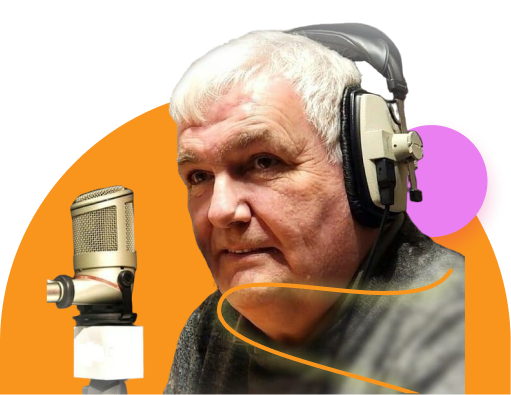
Terry Doyle – Consultant Radio Manager and Programmer helping stations grow audience, sharpen their sound, and build high‑performing presentation teams.
Terry is a highly experienced Radio Manager, Programmer and Broadcaster with a long track record of delivering standout results in competitive local and regional markets. He specialises in creating innovative programming, developing on‑air talent, and building the systems and culture that help stations grow their Reach and Share.
Terry has held senior programming and production roles with Kingdom 102, The Chiltern Network, KCBC, Northants 96, Supergold and Classic Gold, shaping station sound and leading teams to consistent success. As a presenter and producer, he has fronted key daytime shows across Ireland and the UK and produced Cork’s 96FM’s flagship talk programme The Opinion Line.


Voicepod offers professional voice services backed by over 30 years of UK and Irish radio expertise.
